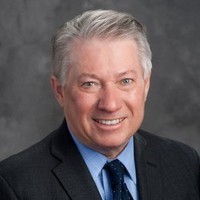
The first chapter of my entry into medicine begins, oddly enough, with a shattered hotel and a stranger's murder — and ends with a man saying my name.
By the spring of 1977, in the third year of my PharmD residency at the University of Kentucky, I had stopped worrying about what came next. I assumed, the way young men assume things, that a job would simply arrive — the way it had for every PharmD ahead of me. It didn't. Classmates secured positions through the winter and into spring while I collected polite non-answers. At the ASHP Midyear meeting in Dallas that December, I'd had a few interviews. None of them felt like anything.
By April, a few months from graduation, things looked dim. Then, almost at once, two doors opened. Tom Humphries offered me a position in Alexandria, Virginia. I was flattered, and I declined — I didn't see myself in the DC area. Around the same time, interviews came through at the University of Minnesota and the University of Missouri-Kansas City, timed so I could fly to both on one trip.
Minnesota went first. A colleague a year ahead of me had already landed there, and they were looking to strengthen clinical pharmacy at St. Paul Ramsey Hospital. The interview went well enough — until a dinner with the clinical faculty drifted, as Minnesota dinners apparently do, into a long conversation about cross-country skiing. I remember realizing, somewhere in that conversation, that this wasn't my place. And I suspect, given how inattentive I'd become, they'd reached the same conclusion about me. It was an easy parting. No hard feelings on either side.
The flight to Kansas City felt different before I'd even landed. I already knew, in the way you sometimes just know, that I wanted to be there. UMKC's medical school was unlike anything else in the country — a six-year, straight-out-of-high-school path to the MD, built by its founding dean, Dr. Edmund Grey Dimond, around an idea that still strikes me as radical: that real medical education happens at the bedside, not in a lecture hall. Students were placed on “docent units,” each led by a physician and a full clinical team — including, remarkably for the time, a clinical pharmacist teaching pharmacology directly at the bedside alongside physicians and house-staff. Three PharmDs ahead of me — Joel Covinsky, Rusty Ryan, and David Rush — had already gone through that door. I wanted to walk through it too.
I landed in Kansas City in the evening and took a cab downtown to a hotel that had clearly seen better decades. On paper it was still grand. In person, every window from street level to roughly the ninth floor had been shattered. I wasn't sure the place was even open. The man at the front desk told me, when I asked, that there'd been a mob hit the night before — they'd found a body on the roof of the building next door.
My first thought was simple: this is where I want to be. Mob violence, I decided, beat cross-country skiing talk any day of the week.
The interviews went well — well enough that I think I was hired before I'd even left town. David Burkholder, something of a legend in clinical pharmacy circles, offered me the position: Docent Clinical Pharmacist on the Blue-4 unit, with a joint appointment as Assistant Professor in both the schools of medicine and pharmacy. The lines of responsibility were blurred from the start — my allegiance ran to the docent unit and the medical school, with teaching duties in the pharmacy curriculum on top of it. I wouldn't have had it any other way.
Before my first day, there was a welcome dinner for the new faculty, hosted by Dimond himself — six new physicians, and me, the only PharmD in the room. It was a lovely evening, and I remember feeling slightly out of place as the one non-MD at the table. Looking back, I don't think Dimond saw it that way at all.
The next morning confirmed it. I was in my first rounds — a conference room full of medical students, house-staff, and attendings, going over the day's plans — when a secretary opened the door and asked me to step out. Dr. Dimond wanted me in another room.
I walked in to find all the other new clinical faculty gathered. Dimond was there to formally welcome us and lay out, in person, his vision for the medical education model he'd built. I remember being stunned that he'd pull us out of our very first day to do this himself, rather than let it happen on paper somewhere.
But the moment that has stayed with me for nearly fifty years was smaller than that. He wasn't only there to address his newly hired physicians. He named me too — Dr. Payne — in the same breath, the same room, the same welcome. Not the token pharmacist tolerated at the table. One of his people.
That's the moment this chapter turns on. Everything that came after — five years of watching medicine practiced the way Dimond believed it should be practiced — started with a man remembering to say my name.